What remediation involves
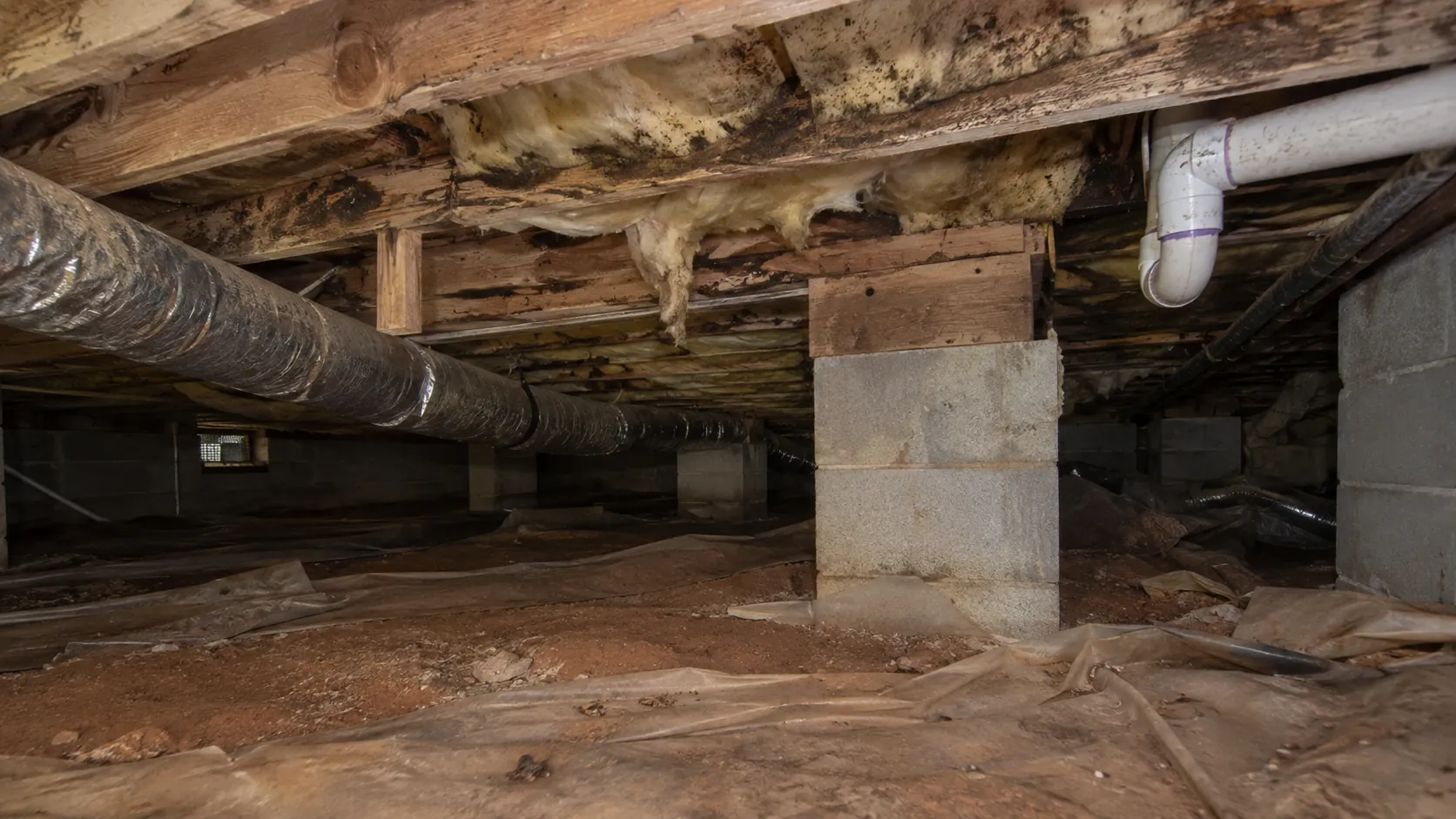
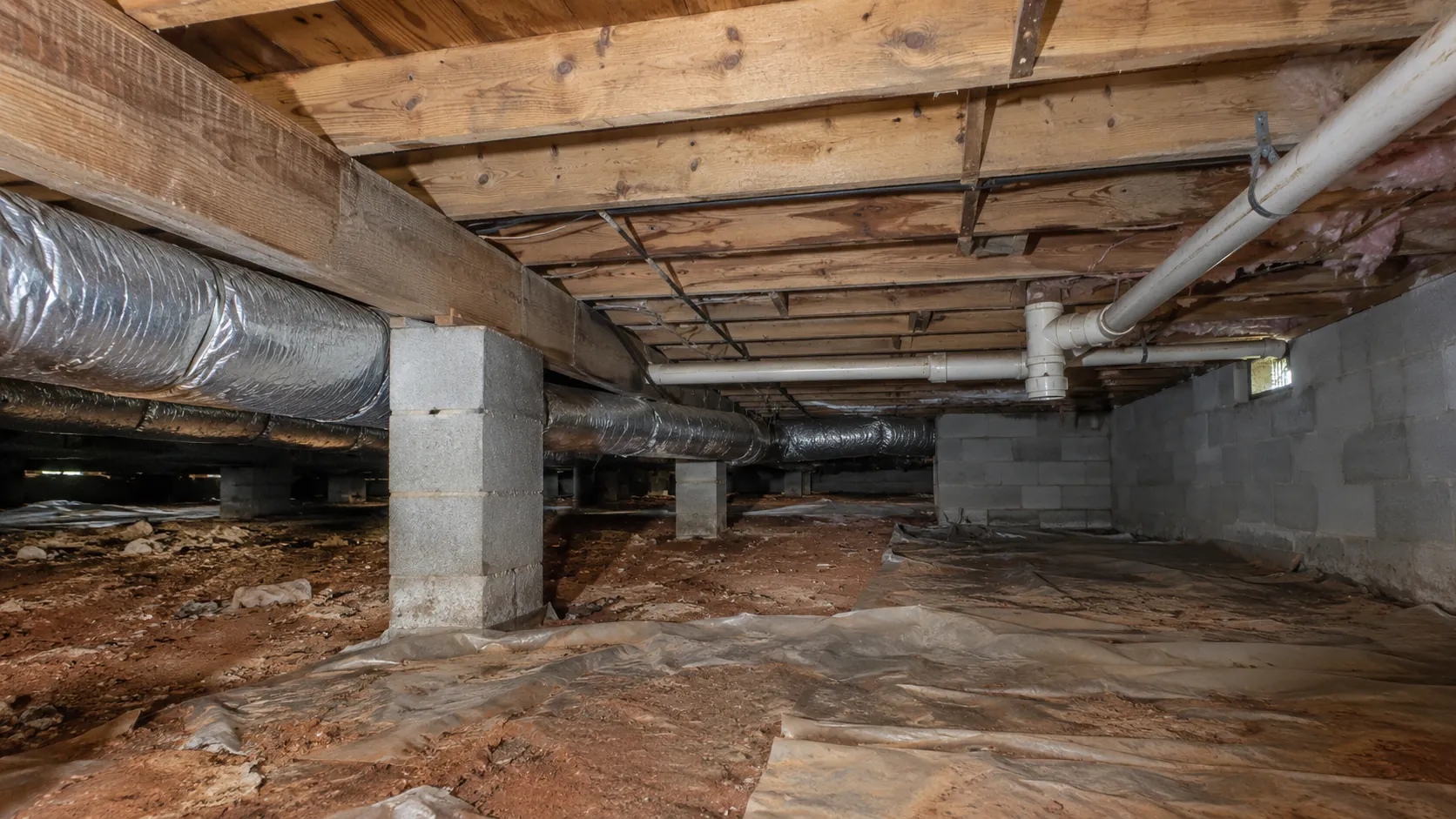
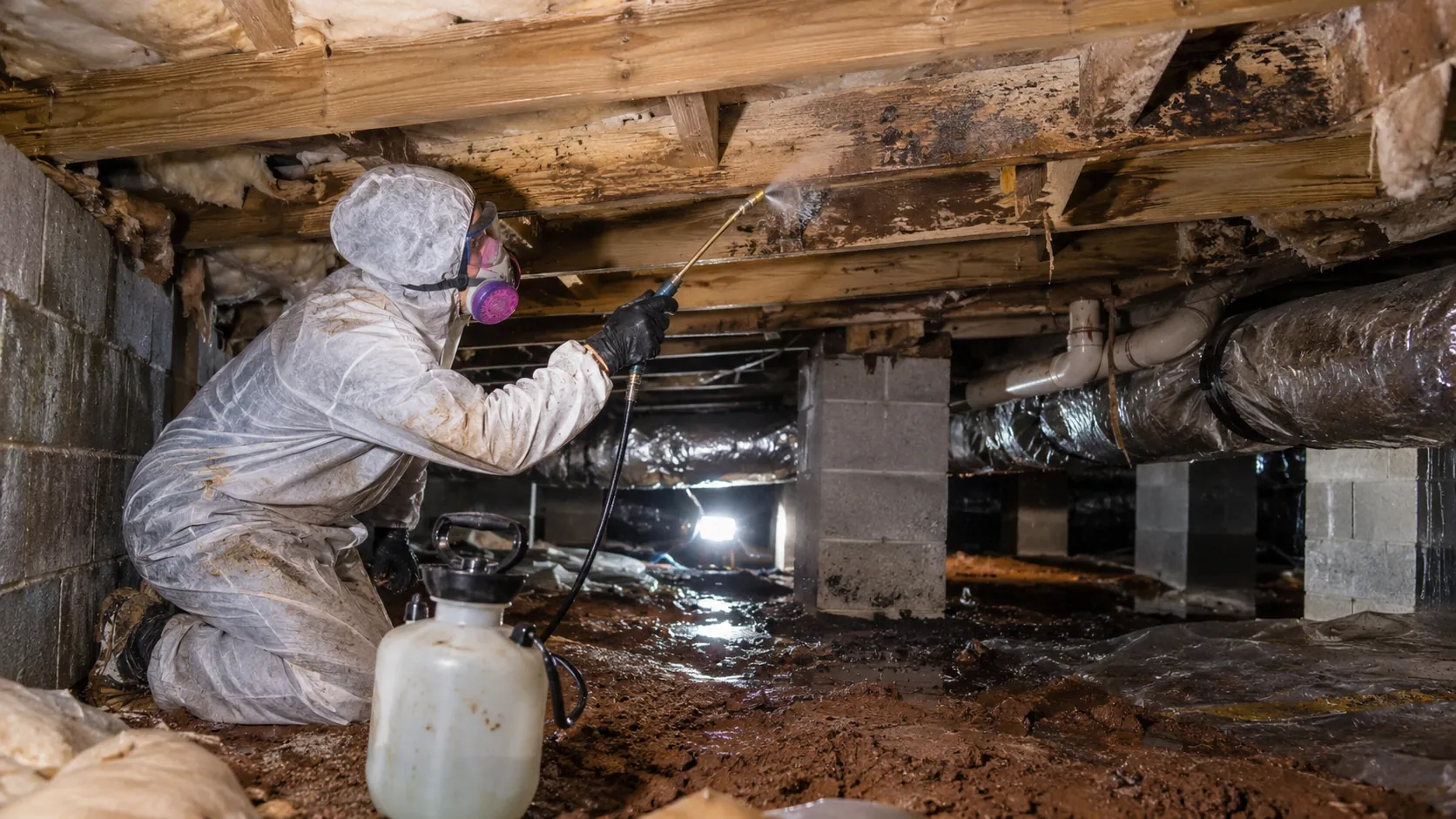
Crawl space mold remediation is the physical removal of mold and mildew growth from floor joists, the subfloor, girders, sill plates and other framing, together with the removal of anything too contaminated to clean - usually wet fiberglass insulation. It is a different job from encapsulation or a vapor barrier. Those stop the moisture that lets mold grow; remediation deals with the growth that is already there.
The two belong together. North Carolina’s public health guidance on mold says it plainly: if moisture problems are not corrected, any cleanup will most likely be only a short-term solution. A remediation quote that says nothing about why the crawl space was damp is quoting half the job.
What it usually costs: remediation is priced against the area of surface actually affected, not the size of your crawl space. Published figures, the minimum charge that makes small jobs cost more per foot, and totals by affected area are on the crawl space mold remediation cost breakdown; the North Carolina headline range is in the cost table further down this page.
Removal methods, and what each one is for
There is no single mold removal technique, and contractors differ on which they use. What they have in common, according to the EPA’s remediation guidance, is the principle: remove it, do not just kill it. The EPA notes that dead mold is still allergenic.
Brushing, scrubbing and sanding. The most common approach on joists and subfloor. Surface growth on wood is physically taken off by hand or with power tools. North Carolina’s public health guidance says semi-porous materials such as wood that are visibly moldy but structurally sound can usually be cleaned and reused, which is why sound framing is cleaned in place rather than replaced. The EPA’s guidance lists damp wiping and HEPA vacuuming among the cleaning methods for wood surfaces.
Blasting. Some contractors blast framing clean with dry ice (frozen carbon dioxide pellets that leave no blast residue behind) or baking soda (sodium bicarbonate). OSHA’s fact sheet on abrasive blasting lists both among the less toxic alternative blasting materials, in general rather than for mold. We could find no government or university guidance that evaluates blasting specifically for crawl space mold, so treat it as one removal method among several rather than a superior one. Whatever the method, ask how loosened material will be contained and cleaned up afterwards.
HEPA vacuuming. The EPA recommends HEPA vacuums for the final clean-up of a remediation area, after materials have been thoroughly dried and contaminated materials removed. In a crawl space, that means the framing surfaces and the floor or old liner that debris fell onto.
Removing what cannot be cleaned. The EPA says porous materials that are wet and have mold growing on them may have to be discarded. In a crawl space, that is almost always the fiberglass batts between the joists: once they have held water and grown mold, they come out and are bagged.
Antimicrobials and biocides. Many quotes include a spray treatment. The EPA’s position is that using a biocide such as chlorine bleach is not recommended as a routine practice during remediation, though professional judgment may sometimes call for it, and that fungicides made for outdoor use should never be used indoors. North Carolina’s public health guidance is slightly softer - it allows an EPA-registered disinfectant on cleaned surfaces - but is clear that such products should not be used alone. If a quote is mostly a spray with little removal, that is the wrong way round.
How big a job it is: the EPA’s size bands
The EPA’s remediation guidance sorts jobs by the total surface area affected, and scales precautions to match. It is explicit that the bands are practical guidance rather than health-based thresholds, but they are a useful way to read a quote.
| Affected surface | EPA size band | Containment the guidance calls for |
|---|---|---|
| Under 10 sq ft | Small | None required |
| 10-100 sq ft | Medium | Limited containment |
| Over 100 sq ft, or where exposure is likely to be significant | Large | Full containment |
For homeowners, the EPA’s brief guide says that if the moldy area is less than about 10 square feet, in most cases you can handle the job yourself. Growth spread along a few joist bays passes 10 square feet quickly, and the size band is also a good cross-check on a price quoted per square foot of affected area.
What “finished” should look like
This is where remediation quotes are vaguest, and it is worth pinning down before work starts. The EPA’s guidance sets out what a completed job looks like:
- The water or moisture problem has been completely fixed.
- No visible mold, mold-damaged materials or moldy odors remain.
- A revisit shortly afterwards shows no signs of new water damage or growth.
North Carolina’s public health guidance adds a number that is easy to check: wood moisture should be below 12 to 15 percent before anything is rebuilt or covered. A contractor with a moisture meter can show you that reading.
Clearance testing. Some contracts - usually for a sale or a dispute - require air or surface sampling afterwards to document the result. The EPA says that in most cases, if visible growth is present, sampling is unnecessary, and North Carolina’s guidance warns against starting with air sampling. Where clearance sampling is genuinely needed, the state’s guidance advises against using a consultant who also provides the remediation. It is a separate line on the invoice, and often a separate company.
Mold on firm wood versus rot underneath
Before anyone prices remediation, someone should push a screwdriver into the wood under the growth. The U.S. Forest Products Laboratory says mold and stain fungi affect wood strength only slightly; decay fungi do not. Growth on wood that is still firm is a cleaning and moisture job - this one. Wood that gives under the probe has moved on to rot, which is structural repair, and it is priced differently. The full guide to telling them apart, and termite or beetle damage from both, is rot, termites or beetles?
Stopping it coming back
Mold grows where moisture lets it. North Carolina’s public health guidance puts the line clearly: with relative humidity kept below 60 percent and no cold condensing surfaces, there is not enough water in building materials for mold to grow; with humidity above 70 percent for extended periods, it will almost certainly grow. An open crawl space in the Triangle commonly sits at 70 to 85 percent from May through September, which is why growth under houses here is so common.
Which fix follows remediation depends on where the moisture comes from:
- Water after rain - drainage first.
- Moisture evaporating from bare or badly covered soil - a vapor barrier.
- Humid outside air through the vents, condensation on ducts - encapsulation with a dehumidifier. The guide to why Triangle crawl spaces stay humid explains this source.
The order matters: cleaning comes before sealing, and the wood should be dry before it is covered.
Mold requests come up often in the older housing of Durham, Chapel Hill and Carrboro.
Last updated